Why Cars Become Part of a Neighborhood’s Identity
A neighborhood’s relationship with driving grows from ordinary routines: where people park, what they carry, and how the street makes room—or fails to—for different ways of getting around.
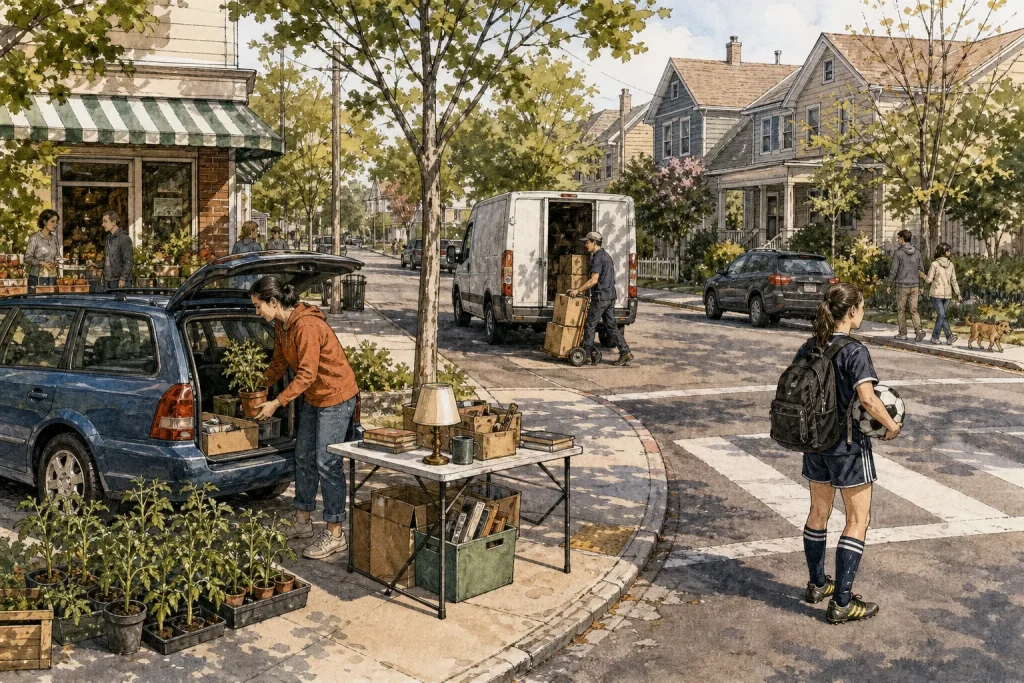
At the corner of Alder and Pine, a blue station wagon sits beside a row of tomato seedlings while its owner unloads a folding table for the block’s monthly swap. A few doors down, a delivery van pauses near a narrow curb cut. Across the street, a teenager waits for a ride after soccer practice. None of these scenes is remarkable on its own. Together, repeated week after week, they help define what this neighborhood thinks a car is for.
That identity is not simply a matter of which models appear in driveways. It comes from the relationship between vehicles, streets, habits, and neighbors. A car can be a work tool, a family room on wheels, a source of noise, a symbol of independence, or a practical way to reach places that are difficult to access otherwise. The balance shifts from block to block, and it can change as people’s needs change.
Consider the invented neighborhood of Linden Court. Its story offers a useful way to see how shared routines turn private vehicles into part of a community’s public character—and how neighbors can discuss that character without pretending that everyone travels the same way.
A street becomes a routine before it becomes a symbol
Linden Court is a short residential street with a small grocery at one end, a school several blocks away, and a bus stop on the busier road beyond the houses. Some residents walk to nearby errands; others depend on a car to reach work, appointments, or family outside the area. The street is narrow, and curbside parking is in demand.
At first, residents describe cars in practical terms. One neighbor needs a hatchback for carrying supplies to a weekend market. Another uses a minivan for school pickups and visits with relatives. A tradesperson keeps a work van close because tools must be available at the start of the day. These are individual choices, but they create a shared pattern: vehicles come and go at familiar hours, and certain spaces become associated with particular tasks.
That pattern can become a kind of neighborhood shorthand. A car left near the corner may mean someone is unloading groceries. A small trailer on a driveway may signal a home renovation. A line of parked cars near the school may accompany a community event. The vehicles are visible, so they become part of the street’s scenery and memory.
Visibility, however, does not tell the whole story. A parked car can represent convenience to the person who owns it and an obstruction to someone pushing a stroller past a tight spot. A delivery vehicle may be essential to a small business while making it harder for another driver to see around the corner. The same vehicle can fit several meanings at once.
Shared habits give vehicles local meaning
In Linden Court, the most recognizable car-related ritual is the Saturday morning exchange. Residents bring unwanted household items to a folding table near the grocery, and a few use their cars to carry boxes, lamps, or bags. People who do not own cars still join by walking over or borrowing a cart. The event is not “about cars,” but vehicle access quietly helps it happen.
Other routines carry different meanings. The parent who offers an occasional ride to a neighbor’s child turns a car into a small piece of informal community infrastructure. The gardener who collects fallen leaves in a hatchback supports a shared planting day. A mechanic who lends a jump starter when a car battery goes flat may become known less for the vehicle itself than for being helpful.
These gestures can build goodwill, but they should not be mistaken for a substitute for dependable public services or safe street design. A ride offered in friendship is voluntary; it cannot be assumed. A neighbor who cannot drive, cannot afford a car, or simply prefers not to use one still belongs fully to the community. A healthy local identity leaves room for those differences.
Some routines are more contentious. Residents may object to engines warming outside bedroom windows, vehicles blocking a driveway, or visitors parking across a path. Others may see a request to move a car as a judgment on their work, family obligations, or ability to get around. Listening for the need underneath the complaint can make a conversation more constructive: perhaps someone needs a clear path, a safer corner, or a reliable place to unload.
The shape of the street changes the story
People’s relationship with driving is shaped not just by preference but by the options around them. At Linden Court, a parent can walk to the grocery with a child, but a person carrying bulky supplies may prefer a vehicle. The bus serves the main road, though the stop is farther away for residents at the quiet end of the block. For a person with limited mobility, a nearby parking space may matter in a way it does not for someone who can easily walk several blocks.
Street design also influences what feels normal. A broad, fast-moving road may encourage drivers to treat it as a route through the neighborhood. A calm street with visible crossings and places to pause may make it easier for neighbors to walk, chat, and let children play under appropriate supervision. Parking layout, sightlines, loading areas, sidewalks, and lighting all shape how vehicles share space with people outside them.
This is why arguments about cars can become arguments about belonging. When someone says, “There’s nowhere to park,” they may be talking about carrying tools or getting home late from work. When another person says, “I can’t see around that vehicle,” they may be asking for a safer crossing. Both concerns can be real. Treating either one as a nuisance to be dismissed usually hardens the disagreement.
Local rules matter, too. A resident should not assume that a curb, driveway, or accessible space can be used in any way that seems convenient. Parking and stopping restrictions vary by place, and safety-related rules deserve particular care. For a specific dispute or unclear local requirement, consult the appropriate municipal office or qualified professional rather than relying on neighborhood custom.
Hypothetical worked example: making room for the swap table
Starting situation: In this invented scenario, Linden Court’s residents plan a Saturday swap near the grocery. The table needs a small area for boxes, but a delivery van regularly pauses nearby, and parked cars narrow the view for people crossing. One resident depends on a car to bring heavier items; another neighbor uses a mobility aid and needs the sidewalk to remain clear. The group has no authority to change parking rules or redesign the street.
Inputs and constraints: The residents have a folding table, reusable signs, a handcart, and a group chat. They need to keep the sidewalk and crossing clear, avoid blocking the grocery’s access, and make the event usable for people arriving without cars. They also need to respect posted rules and the delivery driver’s work.
Actions: The organizers first ask the grocery owner where a table could fit without obstructing customers or deliveries. They then choose a spot on private frontage with permission, rather than assuming the curb is available. The group invites people to bring smaller items by hand or use the handcart, and asks anyone bringing bulky goods to coordinate a brief unloading time with the organizers. A sign directs drivers to keep the crossing and sidewalk open. The organizers also share the event details with the delivery contact, if one is available, so the timing can be discussed rather than imposed.
Expected result and tradeoff: The swap can proceed with a clearer walking route and less conflict around the corner. Residents bringing large items may need to coordinate or carry them in stages, and the chosen spot may be less convenient than the curb. In return, the arrangement recognizes both the usefulness of cars and the needs of people moving through the street on foot. If permission or a safe location is unavailable, the sensible choice is to move the table or change the plan, not to create an obstruction.
The lesson is not that every neighborhood event needs a formal process. It is that a small amount of coordination can turn a car-related conflict into a practical question: what needs to move, who needs access, and which space is actually available?
When a car culture feels welcoming—and when it does not
A neighborhood’s driving culture can feel generous when residents share useful information, allow room for others, and avoid treating a vehicle as a measure of someone’s character. It can feel exclusionary when people assume every household owns a car, when a neighbor is blamed for needing one, or when drivers are treated as careless simply for using the street to reach work or care for family.
Even car-centered traditions can be made more open. A local show of classic cars might reserve a clear path for people using wheelchairs and keep loud demonstrations away from nearby homes. A group planning a scenic drive can share a meeting point reachable by transit or arrange a ride for someone who wants to attend but does not drive. These choices do not erase the event’s focus; they make participation less dependent on ownership.
It also helps to distinguish appreciation from pressure. A restored car can carry family history and craft. A practical vehicle can support a small business. A quiet electric car may suit someone who wants to reduce engine noise. None of these choices needs to become a neighborhood standard. The point is not to decide which vehicle is most worthy, but to understand what role it plays and how its use affects shared space.
Small conversations can shape the next chapter
In the invented Linden Court, the swap organizers learn that the same recurring problem has different causes: the grocery needs delivery access, residents need room to unload, and pedestrians need a clear crossing. A conversation does not instantly settle every parking question, but it gives neighbors something more useful than a familiar complaint. They can talk about locations, timing, permission, and access.
That kind of attention is how a neighborhood’s relationship with driving evolves. Residents can notice when a routine works well, ask who is left out, and make modest adjustments before a minor irritation becomes a lasting label. A shared map of permitted loading areas, a message about a temporary event, or a simple agreement to keep a sightline clear may be enough for one block; another may need guidance from local authorities.
Cars become part of a neighborhood’s identity because they are woven into ordinary life: the morning departure, the grocery run, the borrowed ride, the work van at the curb. Their meaning comes from how people use them and how the street accommodates everyone around them. When neighbors make that relationship visible and discuss it with care, the car can remain a useful part of local life without becoming the only way to belong.
A good place to begin is the next ordinary moment: notice what a vehicle is helping someone do, notice who needs space nearby, and ask what small change could let both needs coexist.
Keep exploring
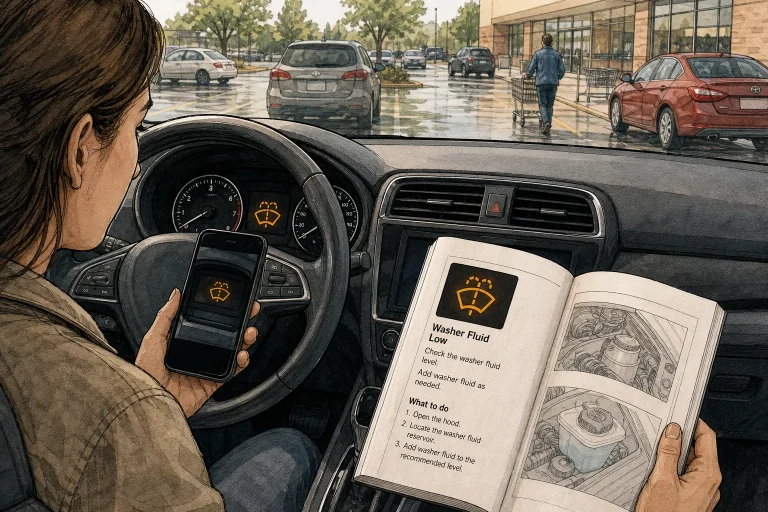
What Your Car’s Dashboard Symbols Are Trying to Tell You
When an unfamiliar light appears, put safe driving first, then use the exact vehicle manual and…
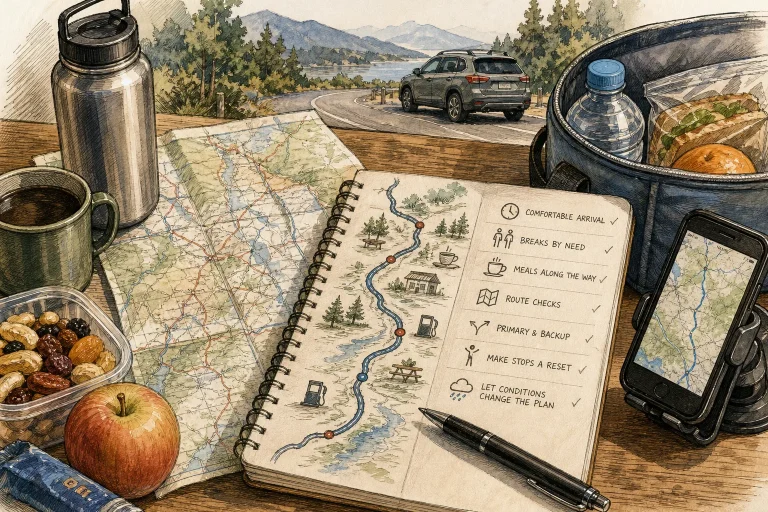
Plan a Long Drive Around Stops, Not Just Miles
Build a flexible road-trip plan around comfortable breaks, dependable food, and route checks, so the journey…