What Your Car’s Dashboard Symbols Are Trying to Tell You
When an unfamiliar light appears, put safe driving first, then use the exact vehicle manual and the car’s behavior to decide what to do next.
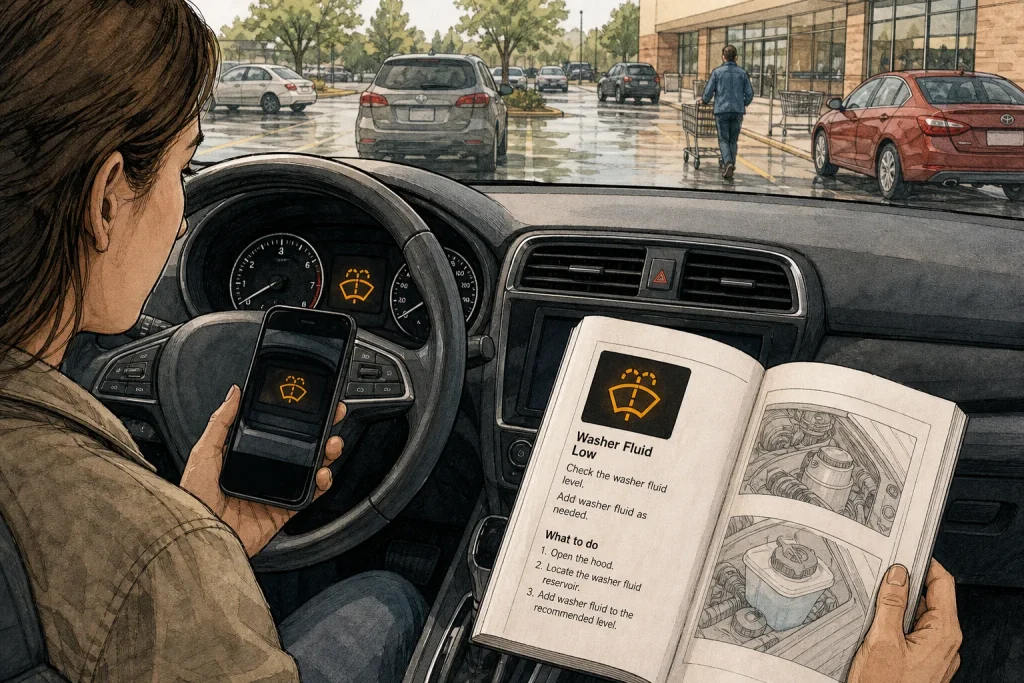
You’re backing out of a parking space when an amber symbol appears on the dashboard. The car still feels normal, but you don’t recognize the shape. Don’t guess from its color or a similar icon you’ve seen elsewhere. First, keep your attention on driving; then, once parked safely, check the manual for your exact vehicle.
Dashboard symbols can indicate routine reminders, system faults, or conditions that call for stopping. Their appearance, meaning, and urgency vary by vehicle. Color and flashing behavior may offer clues on some models, but neither is a universal rule. The owner’s manual and any accompanying display message are the best starting points for deciding what to do.
Make the situation safe before investigating
If a light comes on while you’re moving, keep your attention on the road. Don’t reach for the glove box or scroll through a phone. If the car handles or sounds differently, you see smoke or steam, or the manual identifies the warning as urgent, pull over at the first safe opportunity. If you aren’t sure whether it’s safe to continue, stop somewhere safe and call roadside assistance or a qualified mechanic rather than pressing on.
Once parked, note whether the symbol is steady or flashing, whether a sound or written message appeared, and what was happening when it came on. For example, you might record that it appeared while braking in heavy rain. Those details can help you find the relevant section in the manual and explain the situation if you call for help.
Use the exact owner’s manual
Find the dashboard-symbol section in the printed manual or the manufacturer’s official digital manual for your vehicle’s make, model, and year. If you’re unsure which manual applies, check your vehicle paperwork or ask an authorized dealer to identify the right one. Similar-looking icons can have different meanings and instructions on different vehicles.
Match the symbol by its picture and any accompanying words. Read the surrounding instructions, not just the short label. The manual may explain whether a light appears briefly during the normal startup check, remains on when a system needs attention, or calls for you to stop. It may also distinguish between versions of a symbol.
If the manual isn’t in the car, use the manufacturer’s official website or contact a dealer or roadside assistance provider. A random image search may show a symbol from another vehicle or leave out the action that matters, so don’t treat it as definitive.
Interpret color and behavior cautiously
Some vehicles use color to help distinguish messages, but conventions are not universal. An amber light may call for caution or service; a red light may indicate a more urgent issue. The meaning depends on the vehicle and the symbol, so use the manual—not color alone—to decide whether to stop or continue.
Notice whether the light appears briefly at startup, stays on, or flashes, and read any message on the display. The manual explains what those details mean for your model. If it says to stop, pull over as soon as it’s safe. If it recommends service, follow its advice about whether driving is appropriate until the vehicle is checked.
If the instructions remain unclear, call roadside assistance, the manufacturer’s support line, or a qualified mechanic. Read the exact symbol and message aloud. If the car feels unsafe, don’t continue the trip just to reach a workshop.
Check for symptoms without taking risks
While safely parked, compare what the manual describes with what you can observe. Notice any new sound, unusual smell, visible leak, change in steering or braking, or message that a system is unavailable. Check only items the manual specifically identifies as safe for the driver to inspect. Don’t open a hot cooling system, crawl beneath an unsupported vehicle, or touch unfamiliar electrical components.
If the symbol disappears after a restart, that doesn’t necessarily mean the issue is resolved. Follow the manual’s instructions and note whether the warning returns. A photo taken while parked can help you remember the icon and share it with a technician; never take one while driving.
Work through an unfamiliar symbol
Imagine you’re parked at a grocery store and see an amber symbol you don’t recognize. In this hypothetical situation, the car starts and idles normally, with no new noise or message beyond the icon. You take a photo while parked, find the manual for the exact model in the glove box, and match the symbol in its warning-light section.
Suppose, for this invented example, the manual identifies it as a reminder to check a consumable and gives a safe inspection method. You follow those instructions. If the level is low and the manual says the driver may top it up, you use only the specified fluid and check whether the message clears as the manual describes. If the level looks normal, the symbol returns, or the manual calls for service, you contact a qualified mechanic. The result is a decision based on the vehicle’s instructions and what you observed, not a diagnosis based on color or appearance.
Keep a useful record if the warning returns
For a recurring warning, make a note of the date, exact message, whether the light was steady or flashing, and any symptoms. Add what the manual advised and what you did. This gives a service professional a clearer account, especially if the warning is absent by the time the vehicle is inspected.
Don’t clear warnings by disconnecting the battery or using a diagnostic tool unless the manual or a qualified professional directs you to do so. A disappearing display can make it harder to describe what happened, and it does not establish that the vehicle is safe.
When an unfamiliar dashboard symbol appears, combine the exact vehicle manual with what the car is doing at that moment. Keep the manual accessible and save the manufacturer’s roadside-assistance contact details before you need them. If the manual’s advice and the car’s behavior leave you uncertain, pause somewhere safe and ask a qualified professional for guidance.
Keep exploring

Why Cars Become Part of a Neighborhood’s Identity
A neighborhood’s relationship with driving grows from ordinary routines: where people park, what they carry, and…
Plan a Long Drive Around Stops, Not Just Miles
Build a flexible road-trip plan around comfortable breaks, dependable food, and route checks, so the journey…