Plan a Long Drive Around Stops, Not Just Miles
Build a flexible road-trip plan around comfortable breaks, dependable food, and route checks, so the journey works in real conditions—not just on a map.
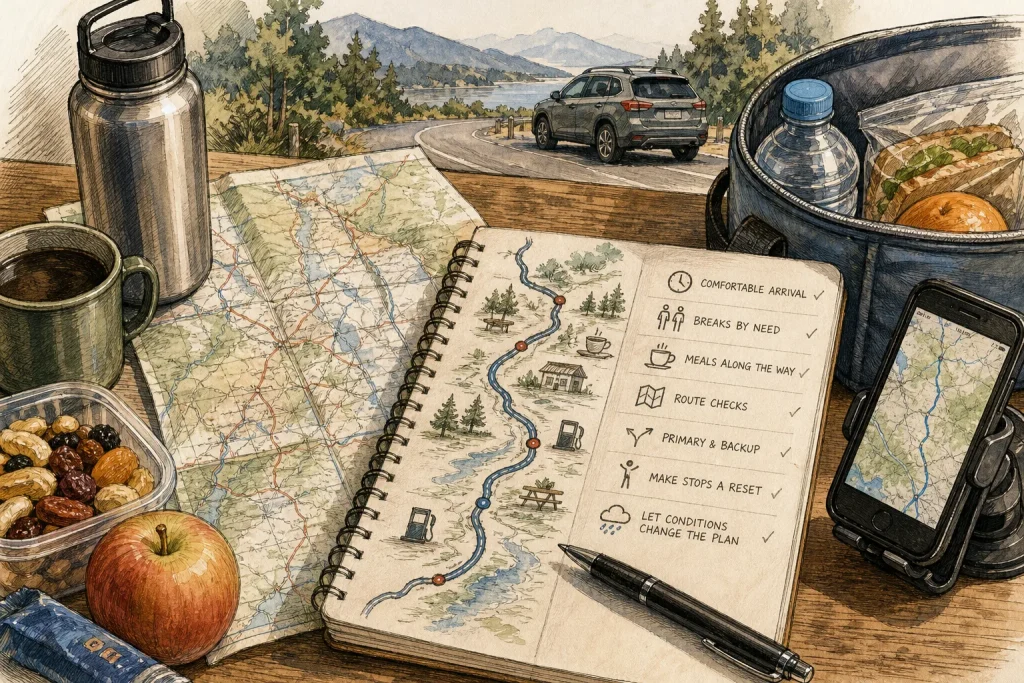
A route can look straightforward on a screen and still feel tiring once traffic, hunger, and a crowded service area enter the picture. Before setting off, mark the places where you can pause, eat, and reconsider the route—not just the towns you will pass. That small shift makes a long drive easier to adapt without turning every delay into a scramble.
1. Set a comfortable arrival window
Start with the reason for the drive and the time you would like to arrive, then work backward. Treat that arrival time as a window rather than a deadline. A visit with family may allow a relaxed afternoon arrival; an appointment may call for extra slack and an earlier departure.
Use a mapping app to estimate the route, but don’t treat its travel time as a promise. Traffic, roadworks, weather, and a longer-than-planned meal can all change the day. Add room for stops before deciding that the departure time is fixed. If the schedule only works when every leg goes perfectly, revise it.
It can help to write down two arrival targets: the preferred time and a later time that is still acceptable. That gives you a simple way to decide whether to keep a planned stop, shorten a visit, or choose a different route. If you have a firm arrival commitment, allow more slack and check current conditions before leaving.
2. Choose breaks by need, not by a rigid timer
Breaks are easier to keep when they offer something useful. Look for places with restrooms, a safe spot to park, shade when appropriate, and somewhere to stretch your legs. A roadside service area, a public park near the route, or a town centre with a café may suit different journeys.
Think about who is travelling. A solo driver may value a quiet place to reset; passengers with children may need room to move and an accessible restroom. If someone in the car has mobility needs, check the venue’s access information rather than assuming a stop will be convenient.
Keep the plan flexible. Mark a preferred break and an alternative farther along the route. If traffic or a passenger’s needs change the timing, you can choose the next suitable stop rather than pushing on just to match a pin on the map. A break should be a real chance to pause, not another task squeezed between driving legs.
3. Give meals a place in the route
Decide roughly when you would like to eat, then find a few realistic options along the way. A café or grocery store in a town can be a calmer alternative to the busiest service area. If you prefer to bring food, pack it so it is easy to reach when parked, and keep any items that need chilling in an appropriate cooler.
Check opening hours and access before relying on a particular restaurant, especially if you expect to arrive outside typical meal times. Keep a backup option nearby or choose a stop where more than one place is available. This matters when a kitchen is closed, parking is full, or a detour changes your timing.
Also consider how a meal fits the drive. A relaxed sit-down stop may be welcome on an all-day journey, while a shorter pause with a snack may suit a route with limited options. Avoid planning around food that requires you to eat while driving. Pull over somewhere appropriate, park safely, and give the meal the time it needs.
4. Map route checks to decision points
Checking the route at every turn can be distracting and unnecessary. Instead, identify moments when a fresh look could change your next choice: before leaving, before a major junction, when approaching a possible detour, or while parked at a planned stop.
Use a navigation app for live traffic if that suits you, but keep another way to understand the route. A downloaded map or a paper map can help if reception drops. Set up the route before moving, place the phone in a secure mount, and make any changes while parked. If another passenger is available, they can handle route checks without pulling the driver’s attention away from the road.
Route checks should include more than congestion. Look for closures, severe weather alerts, and changes that affect access to a planned stop. A faster route is not automatically the better choice if it adds a confusing junction, leaves fewer safe places to pause, or takes you far from the services you need.
5. Keep a primary route and a simple backup
A backup is most useful when it is easy to understand. You do not need to map every possible alternative. Identify a second route for a likely problem area, such as a major crossing or a stretch with few nearby roads, and note the point where you would decide to use it.
Compare the options for more than estimated time. Consider road type, rest-stop access, weather exposure, and whether the alternative passes through places where you can safely stop. If the route changes, update the navigation before moving and tell passengers what has changed. Avoid making a sudden turn because a phone suggests a shortcut at the last moment.
For a route that depends on a ferry, a mountain pass, or a remote road, check the relevant operator or local authority for current access information. If conditions are uncertain, a safer, more familiar route may be preferable to a theoretical time saving. When a decision has safety implications, follow local guidance and use sound judgment.
6. Make each stop a reset, not a race
Once parked, give yourself a moment before jumping into the next task. Use the restroom, drink water, stretch gently, and check whether passengers need anything. If you have been sitting for a while, a brief walk around a safe area can feel more restorative than remaining in the car with the door open.
Use the pause to review the next leg: destination, route, likely traffic, and the next reasonable place to stop. Put away anything that could shift around the cabin, and settle in before moving off. If the driver feels drowsy or unwell, don’t treat a quick stretch as a substitute for rest. Stop somewhere safe and consider whether another driver, a longer pause, or a different plan is needed.
Keep the stop calm rather than overloading it with errands. A fuel stop can also be a good moment to check the route, but it need not become a rushed meal, shopping trip, and schedule review all at once. Choose the tasks that help the next leg and leave the rest for another pause.
7. Let conditions change the plan
Before departure, check the weather and any known road alerts. During the journey, revisit that information at a planned stop or through a passenger. Rain, poor visibility, strong winds, or a closure can affect how comfortable a route feels and how long it takes. If conditions worsen, allow more time and choose a place to pause rather than trying to preserve the original schedule.
Keep the people travelling with you in the conversation. A passenger who feels unwell, needs a restroom, or is becoming anxious may need a change to the plan. Agree that anyone can ask for a stop. That does not mean every request requires an immediate roadside halt; it means you find a safe, suitable place as soon as practical.
Small adjustments can prevent a tiring day from becoming a pressured one. You might skip a scenic detour, make a meal stop earlier, or choose a quieter road with more places to pull in. The best route is the one that fits the conditions and the people in the car, not necessarily the one that looked neatest when you first planned it.
8. Keep the plan visible and easy to change
Put the essentials in one place: the destination, preferred stops, backup stops, and any route decision points. A note on your phone, a printed page, or a shared map can work. Keep the plan simple enough to scan while parked; detailed directions belong in the navigation system, not in a document the driver needs to read on the move.
Share the plan with a passenger so they can help with navigation and timing. If you are travelling alone, set up your route and audio guidance before driving, and pull over before changing anything that needs attention. A passenger can also keep an eye on opening hours or check whether a chosen stop is still a sensible option.
At the end of a leg, update the next stop rather than trying to preserve every original detail. A plan is a working aid, not a contract. If a stop is closed or the route has changed, choose the next reasonable alternative and move on.
A hypothetical worked example for a flexible day
Imagine a driver leaving a residential area for a family visit in a different city. The route crosses a busy junction, and the driver is travelling with a passenger who needs regular restroom access. They have no fixed appointment, but they would like to arrive before the evening meal.
They first choose a preferred arrival window and check the route for likely congestion and road alerts. They mark a service area with accessible restrooms as the first planned break, then note a town café as an alternative if the service area is crowded. They pack water and a simple snack, and identify a grocery store near the route as a backup meal option if the café is closed.
Before leaving, they download the route and agree that the passenger will check traffic while the car is parked. At the first stop, the passenger is comfortable, but traffic ahead has slowed. They use the pause to compare the primary route with a familiar alternative. The alternative would take them through a busier town, so they keep the original route and add a later stop instead. The expected result is a less hurried journey with a clear fallback; the tradeoff is that they may arrive later than the earliest estimate.
That is the value of planning around stops: it gives the day several sensible places to pause and decide. Pick the stops that suit your passengers, keep one or two alternatives available, and let real conditions—not the mileage counter—shape the pace.
Keep exploring
Why Cars Become Part of a Neighborhood’s Identity
A neighborhood’s relationship with driving grows from ordinary routines: where people park, what they carry, and…
What Your Car’s Dashboard Symbols Are Trying to Tell You
When an unfamiliar light appears, put safe driving first, then use the exact vehicle manual and…